Context, Intent and Target Group
Background Information
Our Purpose
To create a culture where all children can thrive and enjoy physical education (PE), school sport and being active, it is vital that we listen to the voices of our young people. The Merton School Sport Partnership (MSSP) wanted to capture the voices of students from all areas of our Borough, and especially from those children that weren’t as engaged in their PE lessons, or as active as their peers; as well as those from under-represented groups (as evidenced within our Merton School Sports Survey school level participation data). In September 2024 we set about planning our in person Pupil Voice project which listened to the voices of 250 children from Key Stage 2 (KS2).
We would like to thank Sukpal Uppal, Participation and Engagement Manager, London Borough of Merton, for his support in this planning process. We have also worked alongside Janna Scott, from the Merton Borough of Sport team, to listen to the views of KS 4/5 students at our three Special Schools; to better understand their specific needs, interests and the barriers they face to being active and enjoying PE and sport both in school and the community.
What was the aim of work?
Our aim was to discover what Merton’s least active children enjoyed about PE and sport at their schools, the barriers that they face, and how they would like it to look in the future. This included their school swimming lessons, delivered by our local provider, Better (GLL). In addition, MSSP used this opportunity to gain vital feedback about the sports events and festivals we deliver across the school year. In the academic year 2024–25, MSSP delivered 67 primary school sports events in a range of sports and for children of all abilities. We wanted to find out what is important to our relatively inactive children when they come to a sports event and how we can ensure that those attending future events and competitions have a positive experience which supports a lifelong love of being active.
Over the academic years 2023–24 and 2024–25, all Merton Primary and Secondary schools (Special Schools are not included by Sport England in this process) were invited and encouraged to complete the Sport England Active Lives survey. Data from the Merton Schools report in 2023–24 suggests that 49% of students surveyed were active for at least 60 mins per day across the week.
Attitudes towards sport and physical activity (years 3–11 only) suggested that 54% agreed strongly that they enjoyed taking part in exercise and sports, 68% agreed strongly that they understand why exercise and sports are good for them and 26% agreed strongly that they find exercise and sports easy. In years 1–2, 68% love playing sport, 78% love being active and 78% find sport easy. Data from this will also be used to contribute to our insight and future planning to engage more children to be active every day.
Which outcome(s) did it focus on?
- 4. To support the personal development of targeted young people through youth engagement and leadership
- 5. To advocate and engage key stakeholders on the value of School Games to support local provision and improve the experience for young people and their families
Which expectation(s) did it meet?
- Using the development plan to show how community connections will be made for young people to continue their participation.
- Using local insight and youth engagement to identify young people and schools that would most benefit from a targeted School Games offer.
- Developing a case study to show where you have made the most impact against local priorities, and through effective storytelling share your learning locally and nationally.
- Collaborating with key partners to inform the local and county offer to tackle inequalities and ensuring inclusive and safe practice.
- Prioritising resources to implement meaningful youth engagement so young people have a voice and choice of opportunity.
- Work with schools to maintain and grow their active engagement in School Games.
- Identify schools that are not engaged and developing strategies to improve this.
- Establish a clear method of communication with all schools within the SGO area.
- Planning for and increasing delivery of 60 active minutes for every child.
- Co-ordinate and signpost schools and young people to a programme of relevant training of leadership, coaching, volunteering and officiating experiences.
- Co-design and deliver a broad and balanced School Games offer that is informed by insight and youth engagement and embeds positive experiences. It is expected that an SGO will facilitate a minimum of 12 targeted inter competitions/events/festivals with clear intent.
Community links
- Headteacher group
- Leisure providers
- Local authority
- Youth board within Local Authority
Intent
For us at the Partnership, it was important to gain an understanding on how we can continue to provide a positive experience for those attending our events. Also, how we can support the training and development of school staff to enhance their provision and meet the needs of the least active students.
Target group
- Ethnically Diverse Communities
- White (British or English)
- White (not British or English)
- Mixed
- Asian or Asian British
- Black or Black British
- Girls
- Primary Schools
- Pupil Premium
- Specific Year Group
- 3
- 4
- 5
- 6
- Targeted Groups of Young People
Implementation
The Process
Each year, as part of their affiliation with MSSP, schools are tasked to complete ‘The Merton School Sports Mark’ (MSSM) Excel spreadsheet survey. This self improvement tool provides schools with a quantifiable framework to identify their strengths and areas to improve, against the government and MSSP recommendations for PE and physical activity.
To improve the equity and inclusivity of MSSP’s and the school’s provision, the MSSM also gathers valuable data around the different characteristics of children that are accessing extra-curricular sport/physical activity (PA) and representing their school at events. This helps to inform us which children are not accessing the opportunities, and to consider their protected characteristics including:
1. Gender
2.Pupil Premium
3.Global Majority
4.Special Education Needs and Disabilities (SEND)
5.Those with Educational Health Care Plans (EHCP)
Primary Schools
Based on their own data, the PE coordinator in each primary school was asked to select around six relatively inactive pupils from those underrepresented groups to take part in the discussion groups.
• Between September 2024 and March 2025, MSSP visited every primary school in our affiliated network (43), and delivered a Pupil Voice session with the six selected children from years 4, 5 and 6 (two schools provided eight children)
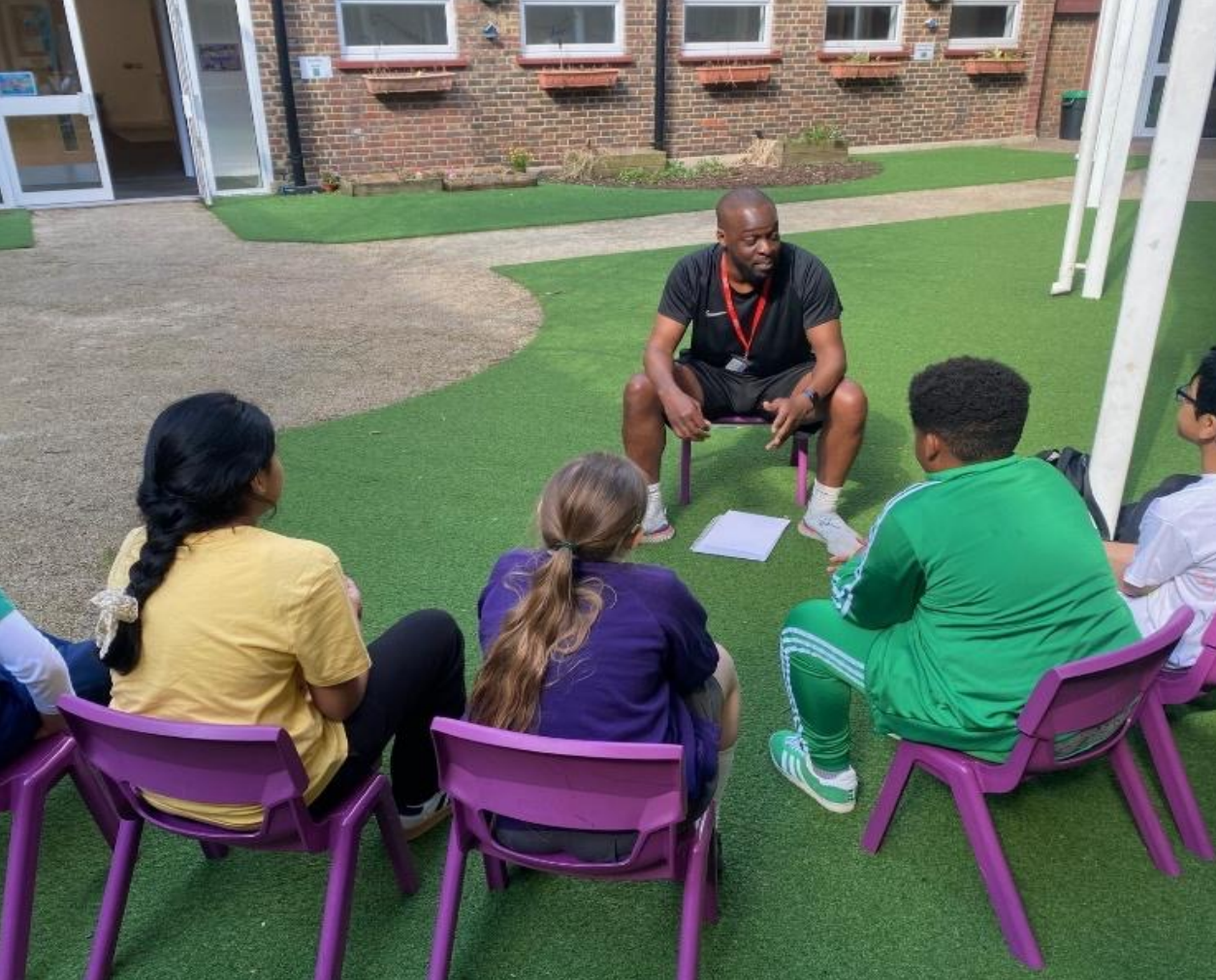
• The Pupil Voice session consisted of a 25–30 minute focus group, where the children were asked to answer questions relating to what they liked about the PE provision at their school. The answers would then lead to discussion points around these topics. After the focus group, the children were shown seven statements relating to our sporting events and asked to rank them in order of importance:
- Activities and the event are safe
- Adults are friendly and make me feel confident
- It is fun
- Good quality and clean facilities
- Good quality and knowledgeable referees
- Medals and trophies are awarded
- Winning the *REFSPECT award
(*an award voted for by all participating schools at our events. Given to the school who best display the values of fair play, respect and kindness to others)
Special Schools
A separate Pupil Voice project has been conducted alongside the Merton Borough of Sport team, specifically for the SEND schools Perseid, Cricket Green and Melrose. These sessions combined a range of more interactive activities, picture cards and stickers to support and enhance the conversations and questioning of students (and in some cases their supporting staff helped with responses). Surveys were also sent home to parents and carers to gain their views. The questions were more aligned with the Active Lives survey (Sport England Children and Young People’s Survey is not available to Special Educational Needs Schools) and considered community provision as well as PE and schoolbased activities. The sessions included questions around PE and physical activity, competitions, sports clubs, students’ access and activity preferences, the barriers around PE, sport and PA and how things could be improved for them.
Each school engaged children with differing needs and so the design of the session and key outcomes differed for each school. Key takeaways overall suggested that most students are happy to exercise and be active at school, and racket sports were popular. Places they like to be active include online, swimming pools, outdoors, sports halls and MUGAs, but not at libraries or youth centres. Time, transport and feeling tired or needing time to rest after school were barriers especially for some children. Children like participating with other children of their own age as this feels safer.
A separate report will be available to highlight the findings from this interactive and practical based session.
Impact
Key Findings - (specific data can be viewed in the attached reporting document)
What’s going well for our students?
• Children across the Borough are enjoying their PE lessons and are happy with the sport/physical activity provision at their school.
• Children are generally happy with the structure of their PE curriculum and the sports on offer at school.
• The most popular themes for a high-quality PE lesson were fair teams for competitions and matches, plenty of equipment leading to high levels of activity and a fun warm up to make sure children are prepared physically and mentally for the lesson.
• The feedback about Swimming from the children at all 43 schools was very encouraging. All topics from the quality of the lessons, enjoyment, support from coaches and the intensive course structure were spoken about extremely positively.
What do we need to address and improve for them?
• The topic raised at almost every school was the concern around the negative behaviour of boys towards girls in PE lessons.
• Children would like to have their say more often. In terms of which sports are on the PE curriculum and a choice of activity in lessons
• Tennis, Dodgeball and Basketball are the sports that children want to play more of (curricular and extracurricular)
• The idea of more specific extra-curricular clubs was mentioned several times (KS2 only, Girls only, beginner only)
• The most popular themes for a high-quality sports event were a fair level of competition, supportive/respectful teammates and opponents, and wanting to feel safe.
• Safety was linked to several areas including having adequate first aid on hand at an event, referees able to explain and enforce clear rules, event staffed by a sufficient number of adults and hygienic facilities (due to not wanting to get ill).
Testimonials
“I felt like my opinions were heard”
(Wimbledon Chase Primary School – focus group participant)
“I liked being interviewed because it means we get to improve P.E in the future. It was good to express our opinions and feelings”
(Gorringe Park Primary School – focus group participant)
“I really enjoyed having my voice heard because we can improve our P.E lessons. I enjoyed speaking to our visitor because hopefully it means we can have different varieties of sport at school”
(William Morris Primary School – focus group participant)
“I like helping children do more sports. Sport can make children more confident and help them forget if they are not happy or hurt”
Malmesbury year 5 sports leader
I absolutely love these responses. Thanks so much – I have to agree with them entirely. Great things for me to change, work on and solve”
(St. Matthew’s Primary School – P.E Lead)
“Thank you for coming in. These responses are really helpful”
(Gorringe Park Primary School – Assistant Headteacher)
Challenges
Challenges and Solutions
When we embarked on this project, we originally felt that being able to carry out the focus groups at all 43 primary and 3 special schools within our network may be unrealistic. However, due to the strong relationships we have formed with PE coordinators and senior leaders, all schools were receptive to welcoming us in to speak to their pupils. Many schools also commented on how this project was useful for them, as it helped them to review their own PE curriculum and would shape their plans for the coming years.
When booking in the Pupil Voice visits with the schools, we stressed that they were welcome to provide a member of staff to sit in on the focus group. This helped build a level of trust around the project. Some schools chose to send a member of staff to make notes for their own purposes, and some schools decided that having a member of their own staff in the room may have an influence on the children and their thoughts. We felt it was vital that schools were given this option during the planning process.
Some groups of children were not very forthcoming with their thoughts and opinions at the start of the focus group. Eventually, due to the relaxed and supportive nature of the adults leading the group, the majority of children eventually felt comfortable to share their views. The key to this was ensuring that they realised that this was not a test of their PE knowledge; it was simply an opportunity to reflect and offer their views on the PE provision at their school.
Sustainability
Outcomes and Impact
After the discussion group, full written feedback was given to the PE Coordinator and Head Teacher so they could consider the changes that might be required to address inequalities, help their students to enjoy PE and sport more within school, and to get more children active every day. MSSP have collated the general themes and plan to use workshops and CPD opportunities to address these.
We shall look at ways as a whole Partnership that we can better understand the needs of our least active students and change the landscape to be more inclusive and engaging for all children. We will pay particular attention to how girls can be made to feel in PE and how to ensure they are included and treated with respect.
MSSP Will...
• Provide training around the impact boys can have on girls in PE and find a way to develop a better model and environment for Girls in sport and PE – working with Play Their Way and our school network.
• Develop resources to support both curricular and extracurricular delivery of a wider range of sports and training for staff. Adding a broader range of sports to our events calendar where needed.
• Review our Competition and Festival calendar for 2025– 26 in line with the EDI needs for our demographic and ensuring safety, fun and supportive school adults are at the top of our list for every event.
Top tips
Top tips
A very worthwhile project!
We believe this project has been very effective and worthwhile for all involved. PE leads have been very receptive to the feedback from their children and have been open to making changes to help engage all children moving forwards. It has been a useful exercise for those delivering PE to get feedback and to reflect on how their lessons are planned and delivered so that all children can enjoy taking part and grow in confidence.
Many of the children that were spoken to as a part of this project felt a sense of pride at having been selected to talk about PE and sport at their school. These are children who are perhaps not regularly chosen to represent the school at sports events and competitions, so to be asked to potentially shape the future of PE at their school felt like an honour, and they were excited to have their voices heard.
There were a handful of children who clearly had strong opinions on some of the negative aspects of PE and sport at their school. They offered their opinions on specific issues in a passionate and articulate way. Hopefully their feedback will be taken on board by PE leads in those schools.
The overriding theme for these relatively inactive children was that they wanted to feel safe if they were leaving their school to attend a sports event. The importance of safety was spoken about from several different angles; from ensuring that the facilities were safe, that they wouldn’t get hurt whilst taking part, and that they felt emotionally safe in the potentially competitive environment.
For us at the Partnership, it was important to gain an understanding on how we can continue to provide a positive experience for those attending our events. Also, how we can support the training and development of school staff to enhance their provision and meet the needs of the least active students.